One Platform, Two Hubs

Each student signs in to the hub for the exams they are sitting, and their practice, tests and results stay in their own account.

The Exam Hub GCSE badge: English, Maths, Science and mock tests

GCSE

Years 10 and 11
AQA, Pearson Edexcel and OCR

Maths, English and Science for GCSE: practice across the whole course, timed mock tests, and a predicted grade in every subject that updates as they work.

  • Maths: number, algebra, ratio and proportion, geometry, probability, statistics and problem solving, for Higher and Foundation.
  • English: reading, grammar and punctuation, vocabulary, and English Literature on Macbeth, Romeo and Juliet, A Christmas Carol, Jekyll and Hyde and An Inspector Calls.
  • Science: Biology, Chemistry and Physics, for Combined Science or the three separate sciences.
  • Mock tests for every subject, plus printable English and Maths papers with full mark schemes.
  • Predicted grades from 1 to 9, with the range each one is likely to fall in.
The Exam Hub 16+ Entry badge: English, Maths, verbal and non-verbal reasoning

16+ Sixth Form Entry

Year 11
Sixth Form entrance tests

The reasoning tests and entrance papers that leading independent and boarding schools set for Year 12 entry, with estimated standardised scores to show where a student stands.

  • Reasoning: the CAT4 verbal subtests, Verbal Classification and Verbal Analogies, and the non-verbal and spatial subtests, Figure Classification, Figure Matrices, Figure Analysis and Figure Recognition, plus Vocabulary, Word Links and Logical Deduction.
  • English: comprehension on real extracts, grammar and precision, and critical thinking.
  • Maths: the CAT4 quantitative subtests, Number Series and Number Analogies, plus algebra, GCSE maths skills and problem solving.
  • Tests: a full CAT4-style mock, which can also be sat one battery at a time, adaptive English and Maths tests, a Critical Thinking Paper and an International Entry Assessment in the style of UKiset.
  • Estimated scores: standardised scores, stanines and percentiles, tracked against the score they are aiming for.

Practice That Teaches

Built from my 17 years of exam teaching, around the papers students actually sit.

The method first, then the questions

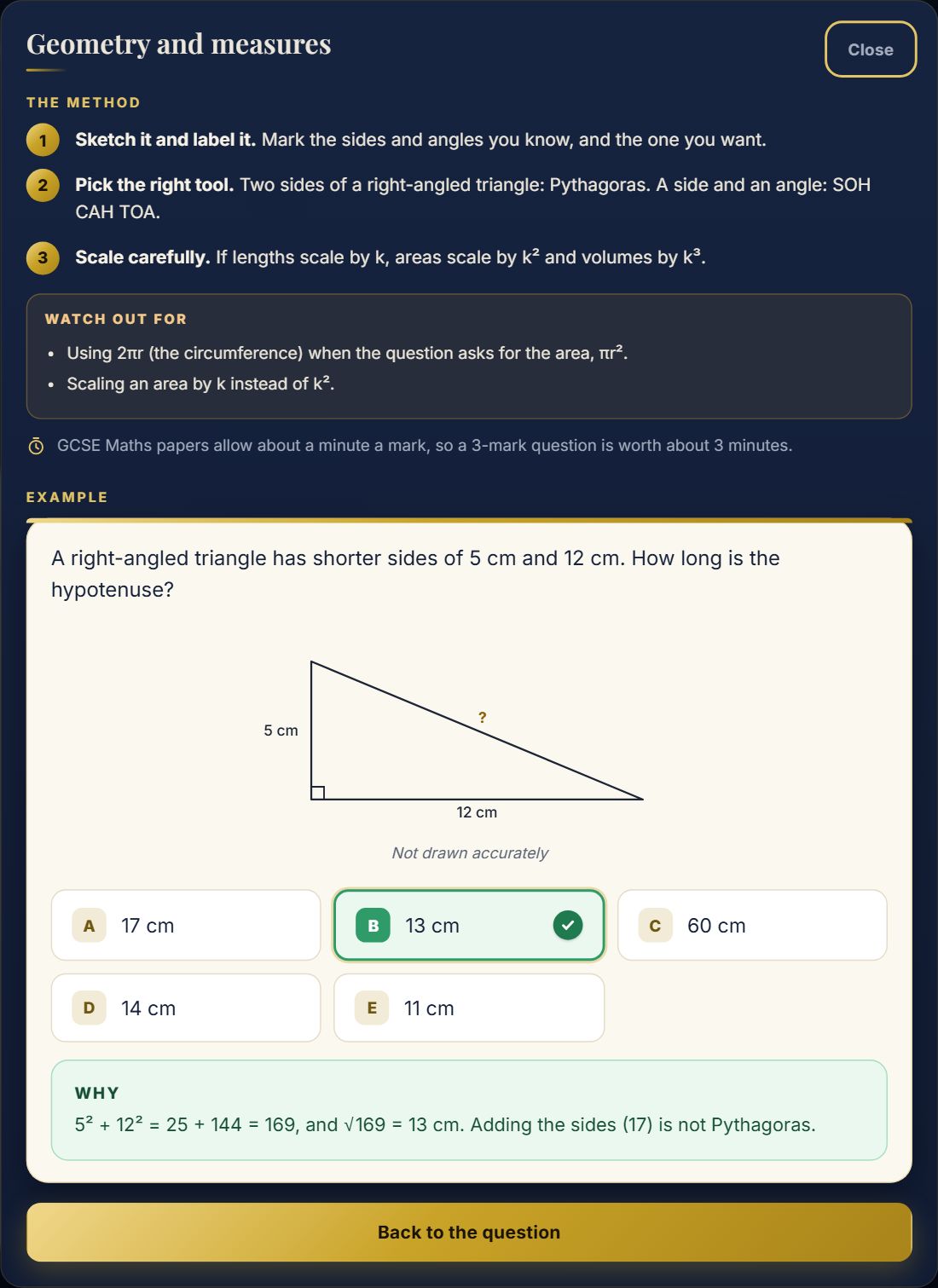
Every topic opens with the method: three clear steps, the traps that cost marks, the pace the real exam expects, and an example with the answer explained.

  • Learn mode has no clock. The right answer and the reason come after every question, and a Method button is there whenever they are stuck.
  • Test mode is timed at exam pace and marked at the end, like the real thing.
  • Diagrams are drawn for the questions that need them: triangles, circles, graphs, charts, circuits and more.
The Method sheet for GCSE geometry: three steps, what to watch out for, and a worked example with a diagram of a right-angled triangle

Practice that adapts to them

Adaptive practice keeps a running estimate of what a student can do in each area and pitches every question to match: hard enough to learn from, not so hard that they give up.

  • Questions they get wrong come back. Each time they then get one right it waits longer (a day, then three days, then a week), and after four right answers in a row it counts as learned.
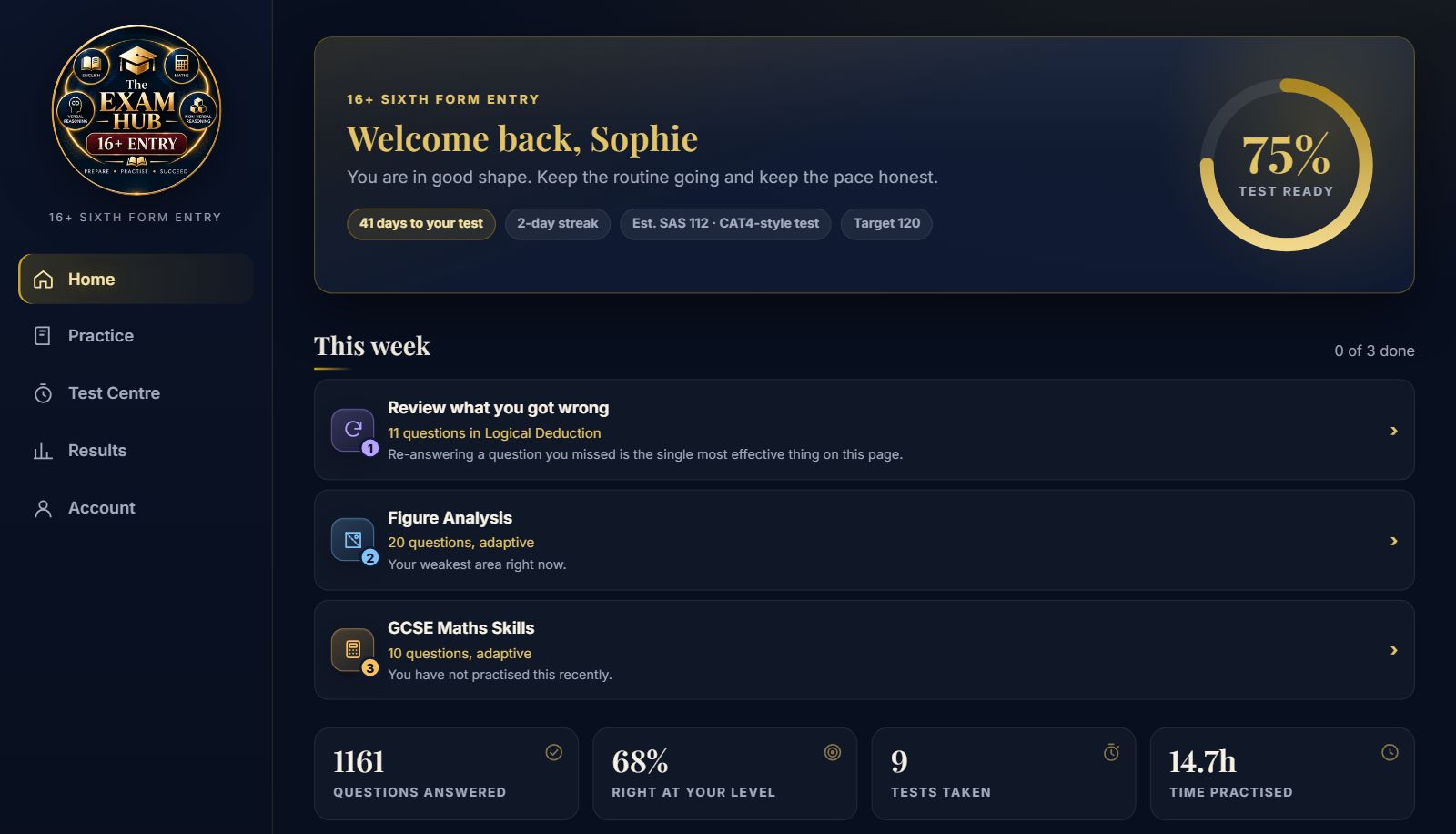
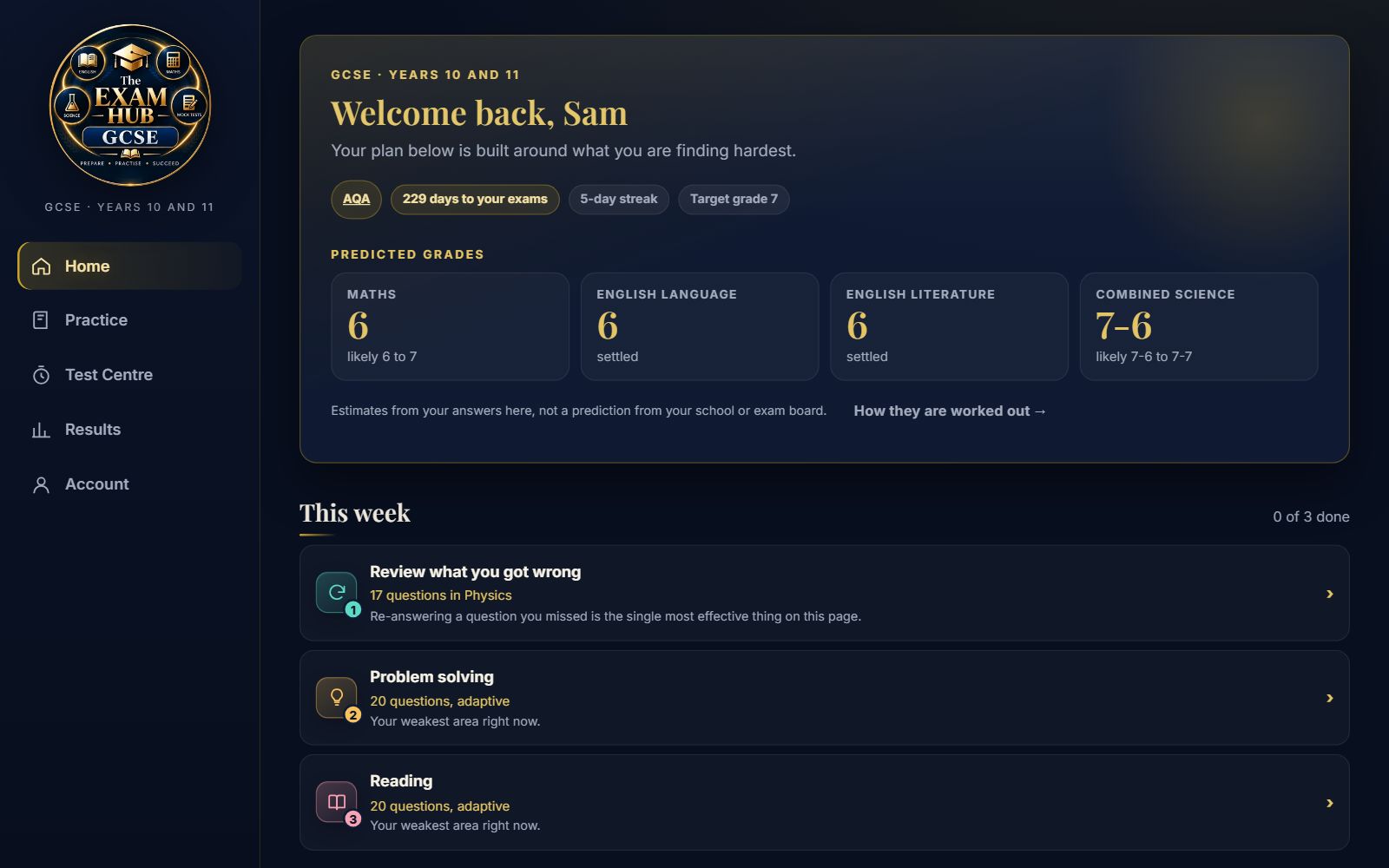
  • The home screen sets a short plan for the week: the questions they got wrong, their weakest areas, anything they have not practised lately, and a timed test as the exam gets closer.
  • For 16+, a Test Ready figure shows how close they are, and says plainly what it is made of.
A 16+ student's home screen: how ready they are for the test, this week's plan and their progress so far

Timed mocks, and how the real exam works

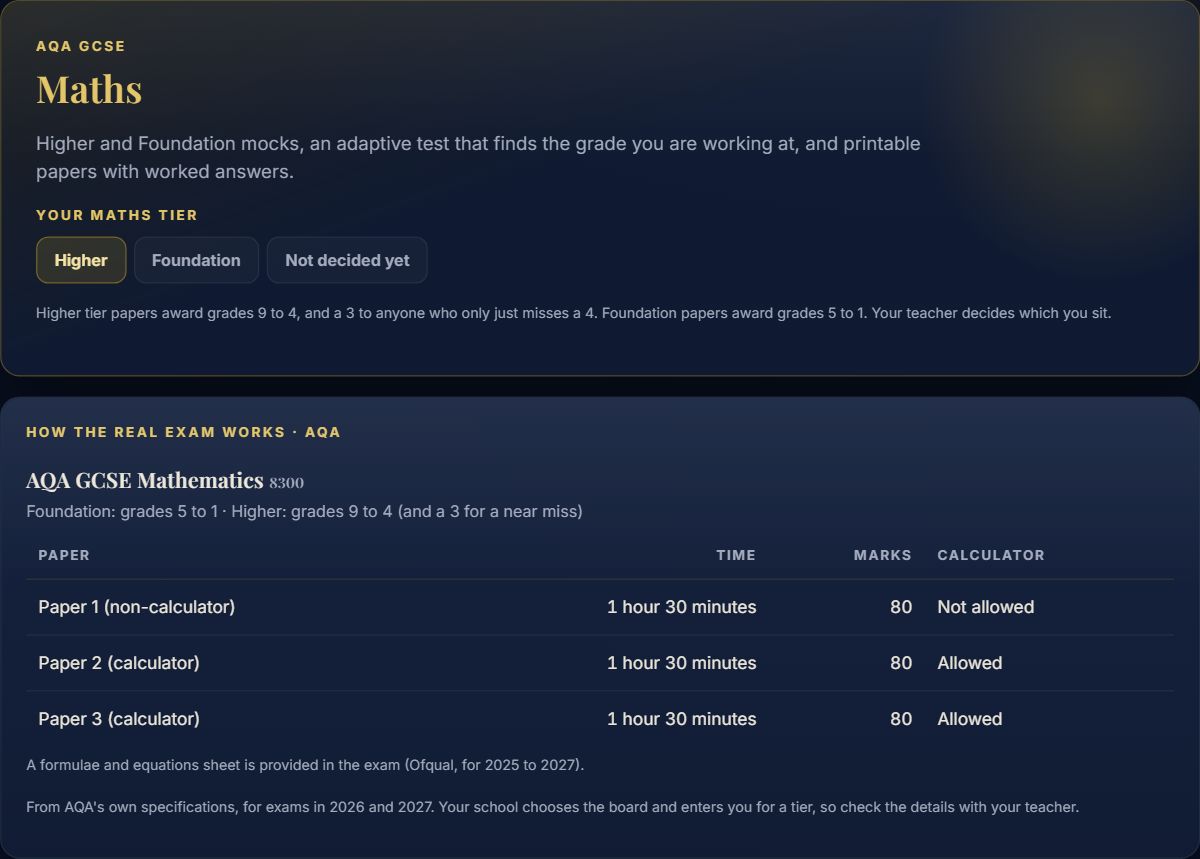
In the GCSE hub a student chooses their exam board (AQA, Pearson Edexcel or OCR) and sees how their real exam works: the papers, the timings, the marks and when a calculator is allowed. They start with a Starter Check, then sit timed mocks across the course: Maths Higher and Foundation, adaptive Maths and English tests, a Literature test on the texts they are studying, and Combined Science, Biology, Chemistry and Physics.

In the 16+ hub there is a full CAT4-style mock: all four batteries, 168 questions in 72 minutes, with the real question counts and timings, and a student can also sit one battery on its own. There are adaptive English and Maths tests, a Critical Thinking Paper, an International Entry Assessment in the style of UKiset, and a diagnostic to see where they are starting from.

How the real AQA GCSE Maths exam works, shown in the GCSE hub: three papers, their timings and marks, and when a calculator is allowed

Results you can read at a glance

Every test ends with a full report: the score, every question with its answer and explanation, and what to practise next.

  • GCSE: a predicted grade for each subject with the range it is likely to fall in, updated as they work. Combined Science is shown on its double-grade scale.
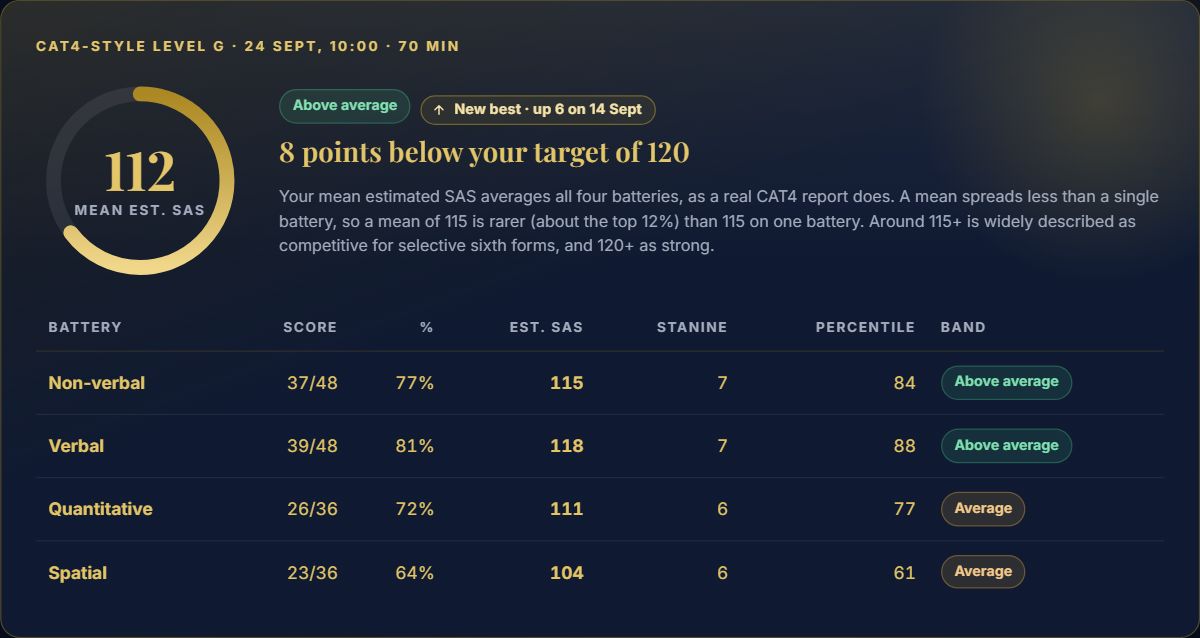
  • 16+: estimated standardised scores for each area, with stanines and percentiles, tracked over time against the score they are aiming for.
  • The question types they find hardest are picked out from everything they have practised, each one a tap away from a focused set of questions.
  • Every figure is an estimate, and the Hub explains in plain English how it is worked out.
A CAT4-style mock report: the mean estimated standardised score, with verbal, quantitative, non-verbal and spatial scores, stanines and percentiles

Every CAT4 subtest, non-verbal included

The 16+ hub covers all eight subtests of CAT4 Level G: Verbal Classification and Verbal Analogies, Number Analogies and Number Series, Figure Classification and Figure Matrices, and the spatial pair, Figure Analysis (paper folding) and Figure Recognition (hidden shapes).

The non-verbal questions are drawn in bold black and white, so every detail is clear on a laptop, a tablet or a phone, and every paper-folding and hidden-shape answer comes with a worked picture: the sheet opened out along its creases, or the hidden shape picked out.

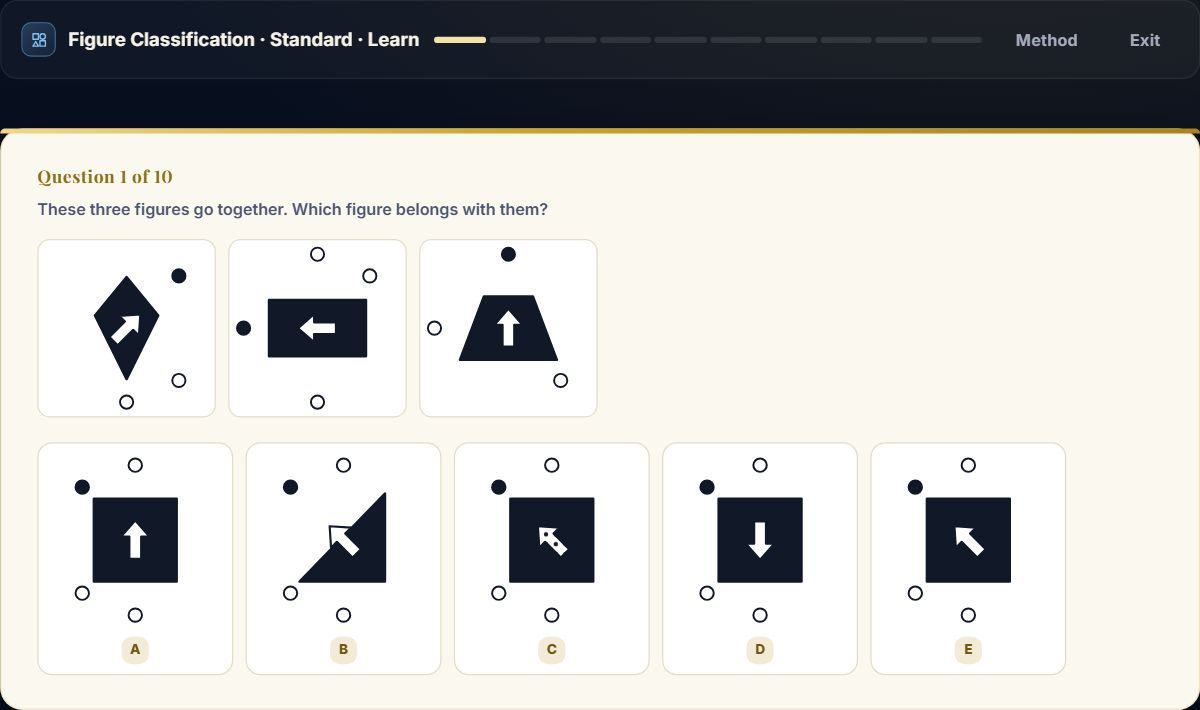
A Figure Classification question in the 16+ hub: three example figures that go together, and five options drawn in black and white

Real texts, and papers to print

Comprehension is built on real writing, from Charlotte Brontë, Dickens, Stevenson, Mary Shelley, Mark Twain, Hardy and Darwin among others, because that is what the exams use.

Some things only work on paper, so both hubs include printable papers with full mark schemes: English reading papers on unseen extracts, and written Maths papers with every answer worked. For 16+ there are also four writing papers, each with a planning page, ruled pages and my own marking grid on the back. Students mark their own work against the grid first, then send it to me.

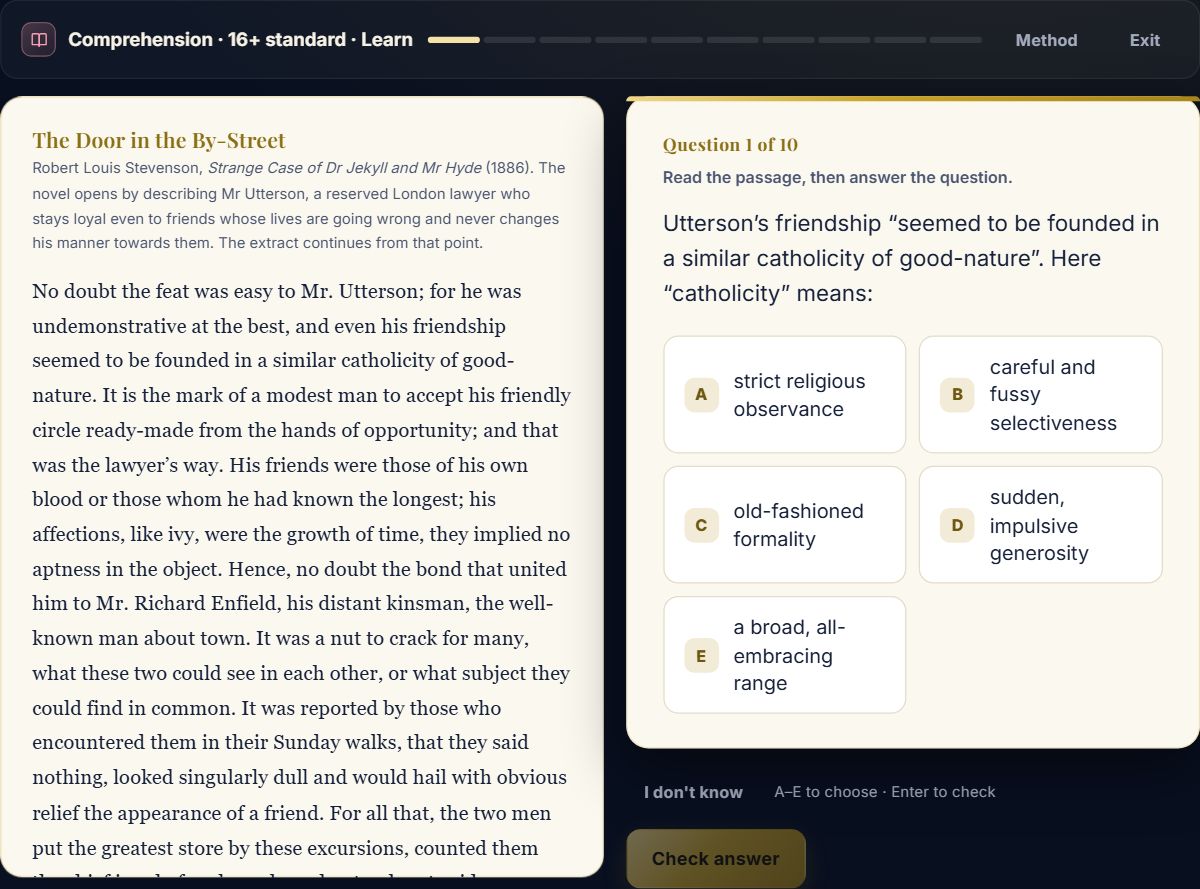
A 16+ comprehension question beside a real extract from Strange Case of Dr Jekyll and Mr Hyde

You Can See How They Are Doing

Progress reports

I can send you a full progress report at any point: their scores or predicted grades, what they have practised, where they are strongest, what needs work and what comes next.

Access arrangements

Extra time of 25% or 50% can be switched on, and every clock in the Hub then allows for it, so a mock matches the arrangement your child has in the real exam. Larger text and a dyslexia-friendly font are there too.

On any device

It works on a phone, a tablet or a laptop, and progress is saved to their own account, so they can pick up where they left off on any of them.

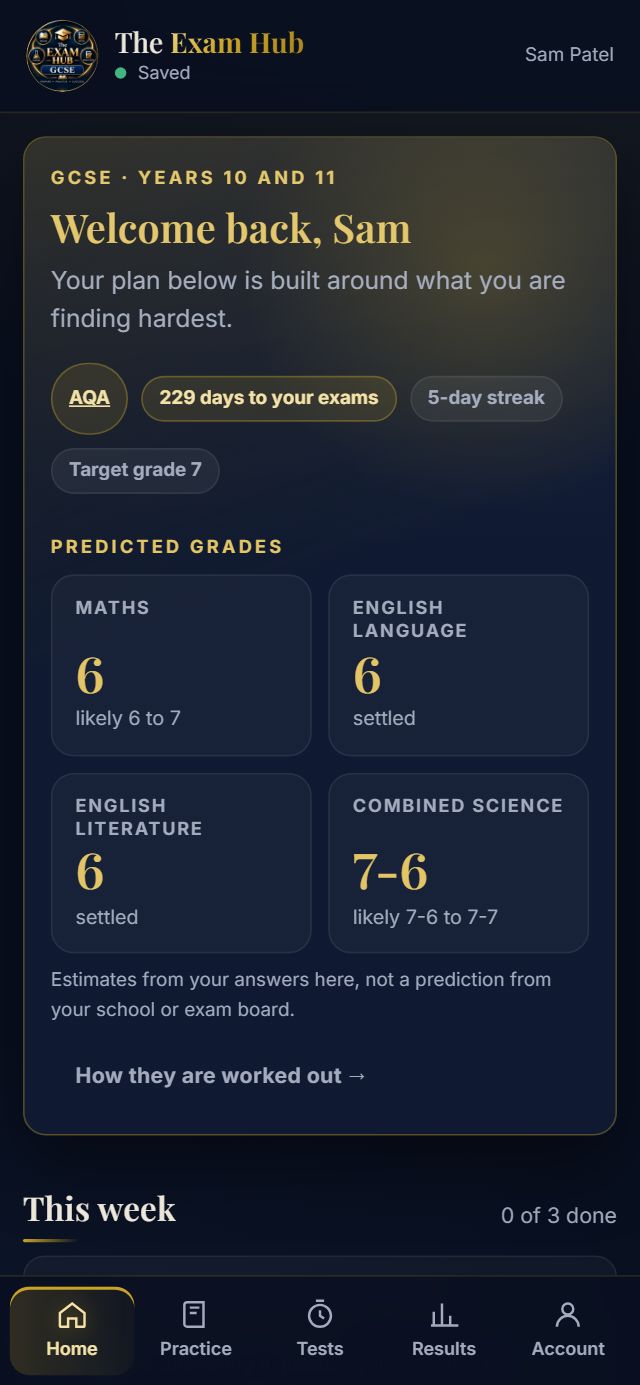
The GCSE hub on a phone: predicted grades for each subject
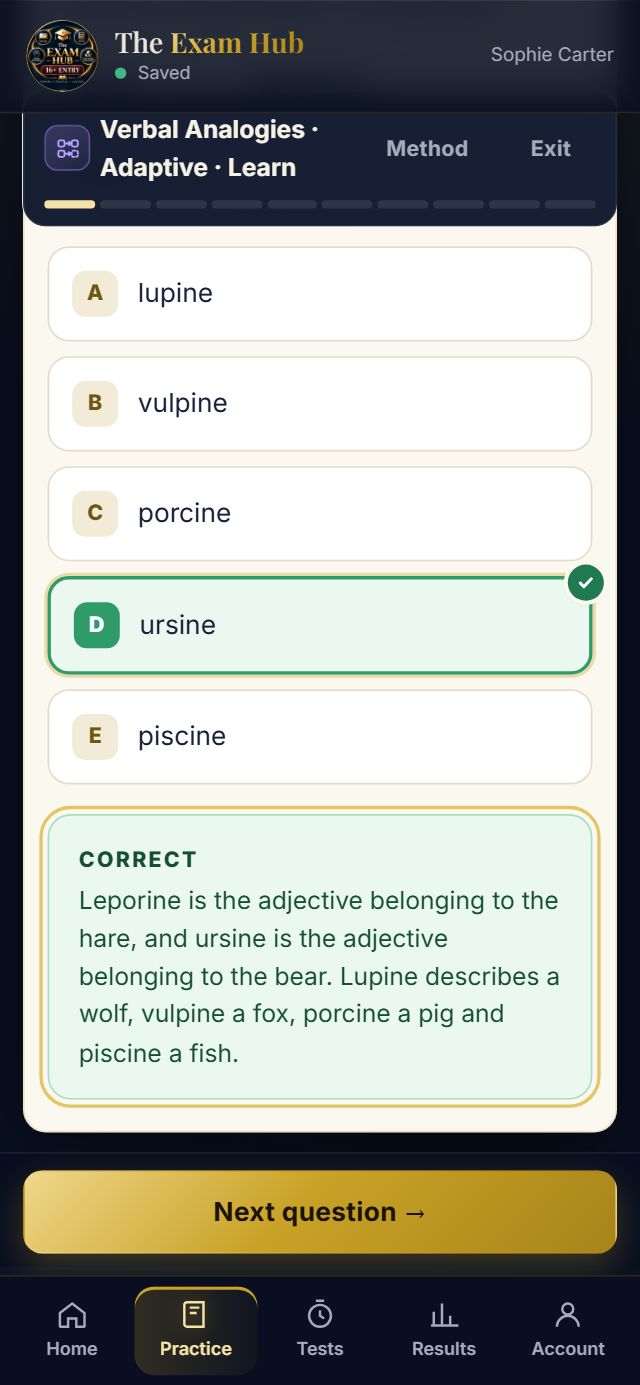
A 16+ verbal analogy answered correctly on a phone, with the reason shown straight away

How to Get Access

The Exam Hub is for the students I teach. Each one gets their own login to the hub for their exams, so the work between lessons is focused and every mock is recorded. Get in touch to ask about access for your child.

Want to look around first? Open The Exam Hub, choose a hub and select Explore the demo to try ten questions in every activity and a short sample of every test. There is nothing to sign up for, and anything you try is kept on your own device.

The Exam Hub is independent practice material written by Ash Morgan. Its CAT4-style tests are not affiliated with or endorsed by GL Assessment (CAT4 is a trademark of GL Assessment Limited), and its UKiset-style assessment is not connected with UKiset (a trademark of UKiset Limited). The GCSE hub is independent practice material, not produced or endorsed by AQA, Pearson Edexcel or OCR. Standardised scores, predicted grades and Test Ready figures are estimates for guidance only. Screens shown are from sample students. Younger students (7+ to 13+) use Ash’s Exam Zone.